Tenerife - La Gomera Electrical Interconnection: The challenge of connecting two islands

Date
April - December | 2023

Type of installation
Electricity

Pipe
HDPE

Drilling length
2 x 801,50 m + 1 x 565,89 m + 1 x 548,95 m + 10 x 60,27 m

Soil
Hard Rock

Location
Chío - Tenerife | El Palmar - La Gomera
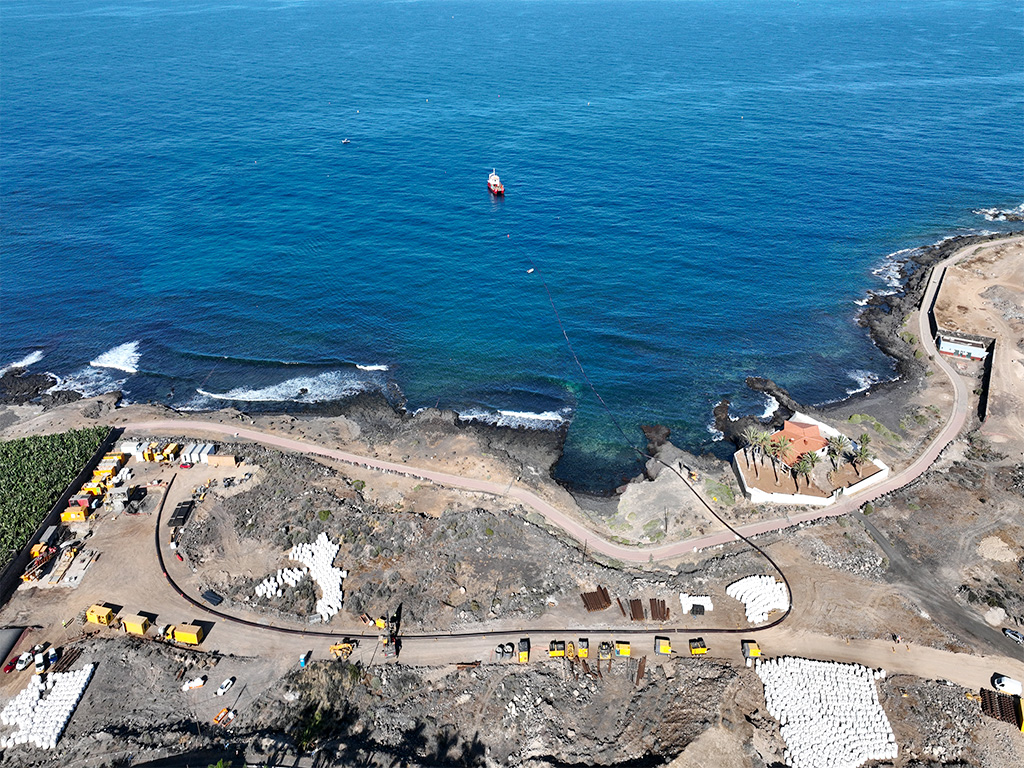
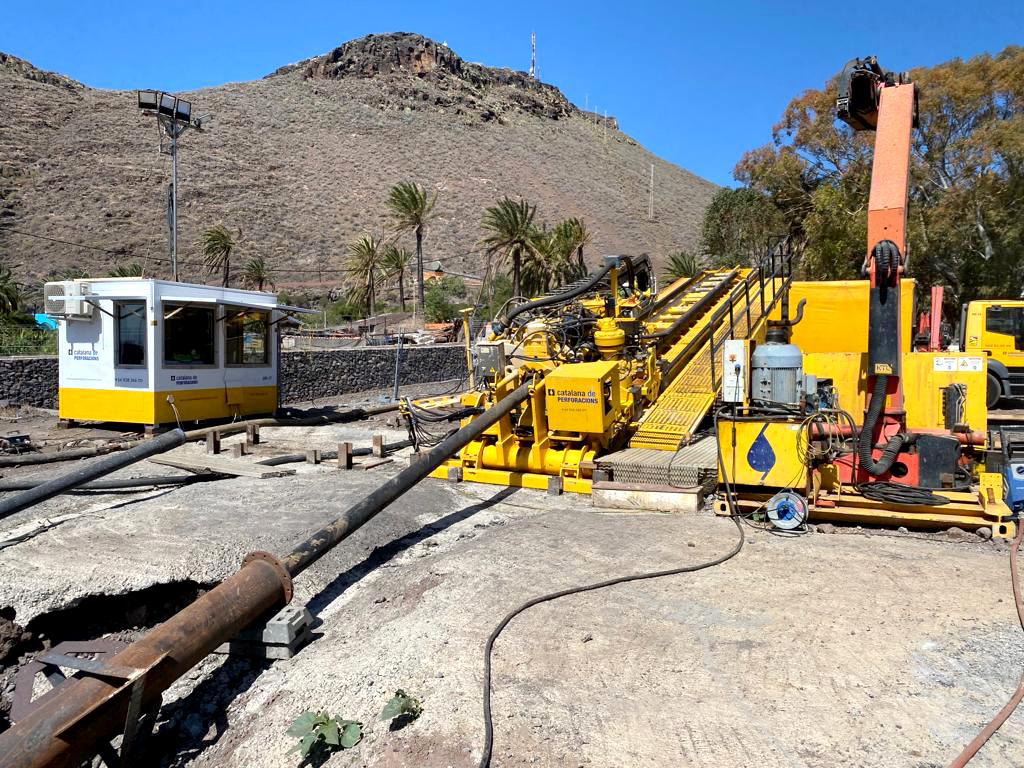
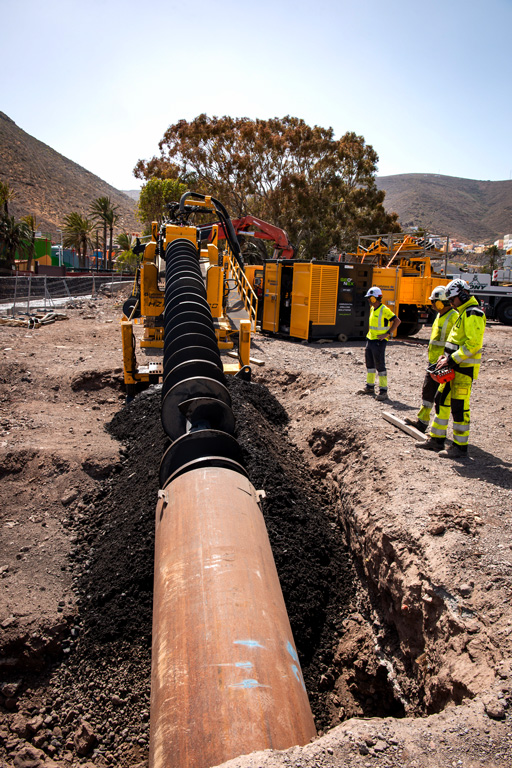
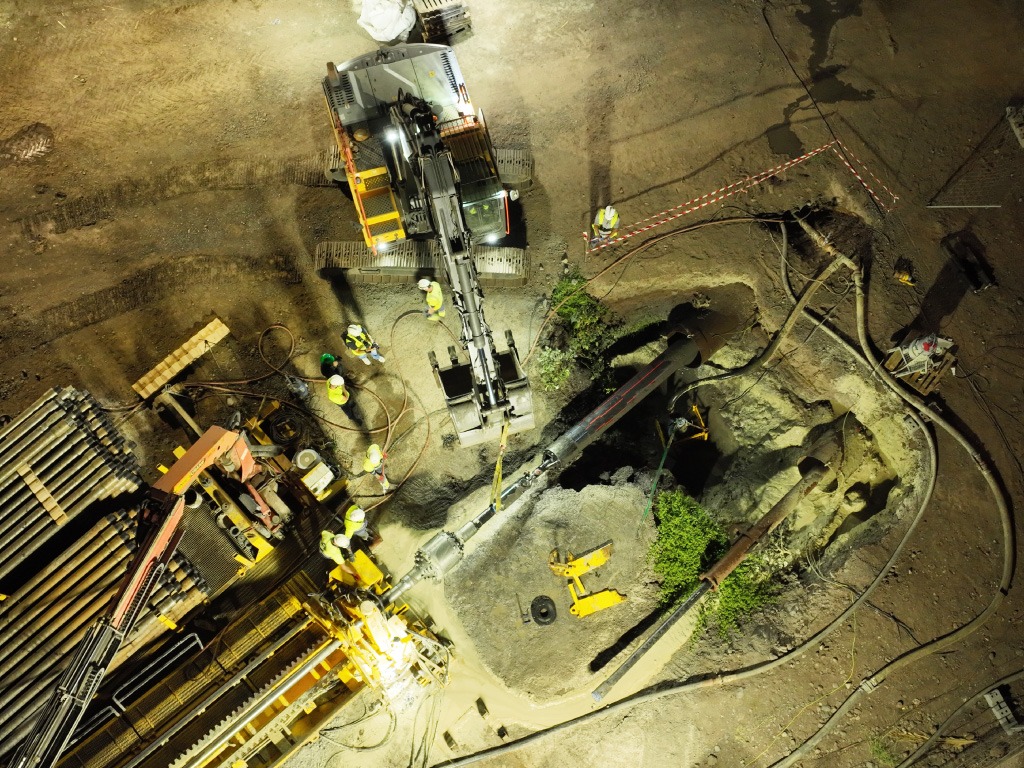
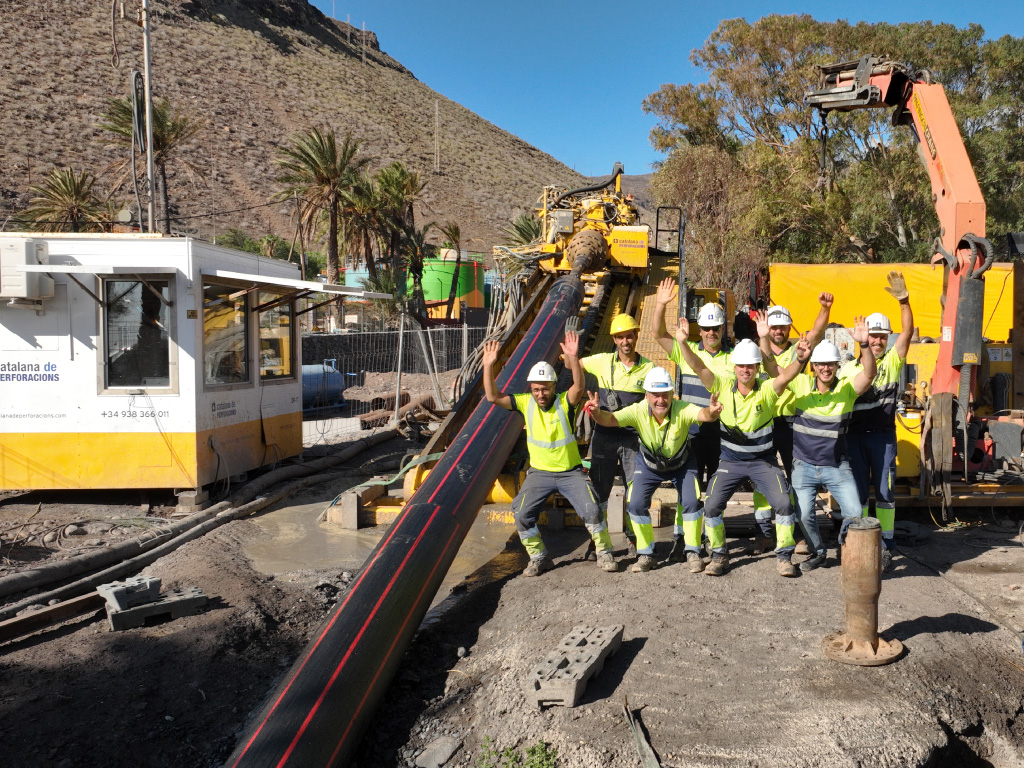
We have completed the drilling works for the new electrical interconnection between Tenerife and La Gomera, a strategic project for the Canary Islands’ power system in which we combined Horizontal Directional Drilling and Horizontal Hammer Boring to adapt the construction solution to the requirements of each section of the project.
The future electrical interconnection between Tenerife and La Gomera will connect the Chío (Tenerife) and El Palmar (La Gomera) substations through a 66 kV double-circuit submarine link, strengthening the security and stability of the Canary Islands’ electricity supply and promoting greater integration of renewable energy sources.
As part of this project promoted by Red Eléctrica de España (REE) and carried out by Prysmian, Catalana de Perforacions completed the drilling works required for the land-to-sea connection of the future submarine cable on both islands.
A key feature of this project was the need to combine two different drilling technologies to address both the geological characteristics of the ground and the demanding environmental requirements associated with an infrastructure of this scale. From the planning stage onwards, specific measures were implemented to minimise environmental impact, including drilling fluid prevention and recovery systems, protection of the working areas, and the restoration of areas temporarily occupied during construction.
A strategic infrastructure for the Canary Islands power system
The construction of a submarine electrical interconnection begins long before drilling operations start.
Our Engineering Department, together with our in-house Geology team, took part in the analysis of geotechnical and subsurface studies, assessing the geological conditions at each location to define the drilling alignments and select the most suitable technology for each operation.
This preliminary work made it possible to optimise the design of the landfalls, anticipate ground conditions and plan every stage of the execution, reducing risks and ensuring the technical feasibility of the chosen solution.
The integration of engineering, geology and field execution is one of the cornerstones of our working methodology and enables us to adapt every project to the actual conditions of the ground.
Catalana de Perforacions’ involvement in the project
As specialists in land-to-sea connections, our role included carrying out all the drilling works required to connect the onshore infrastructure to the future submarine cable.
📍 La Gomera
- Number of drillings: 2
- Drilling solution: Horizontal Directional Drilling
- Length: 2 x 801,50 m
- Diameter: 2 x Ø710 mm
- Installed ducts: 2 × PE100 SDR17
These drillings will accommodate the future electrical cables of the interconnection.
📍 Tenerife (Landfall)
- Number of drillings: 2
- Drilling solution: Horizontal Directional Drilling
- Length: 1 x 565,89 m + 1 x 548,95 m
- Diameter: 2 x Ø710 mm
- Installed ducts: 2 × PE100 SDR17
These works complete the land-to-sea connection of the future electrical link.
📍 Tenerife (Cruce TF-47)
- Number of drillings: 10
- Drilling solution: Horizontal Hammer Boring
- Length: 10 x 60,27 m
- Diameter: 6 x Ø250 mm + 4 x Ø180 mm
- Installed ducts: 6 × PE100 SDR17 + 4 × PE100 SDR17
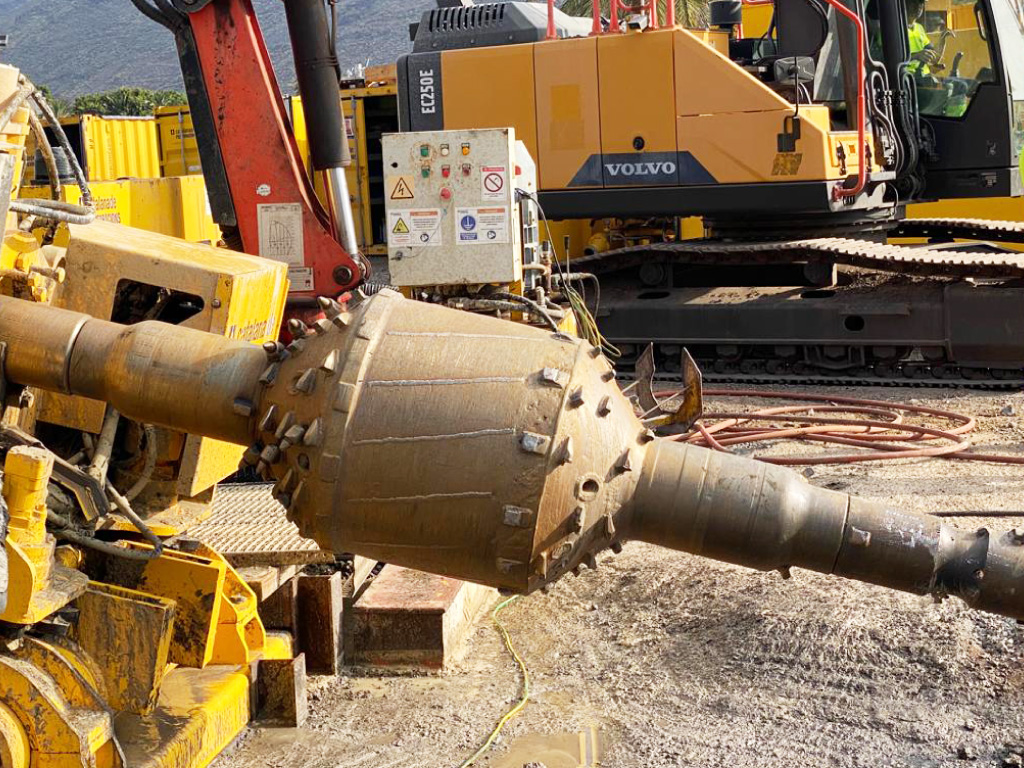
These drillings enabled the crossing beneath the TF-47 road and the connection of the transition chambers to the Chío substation, using a technology specifically designed for drilling through volcanic rock.
📊 Drilling Works summary:
- 2,717.84 metres of Horizontal Directional Drilling (HDD)
- 10 drillings carried out using Horizontal Hammer Boring (Geonex)
- Two drilling technologies applied within the same project
- Complete connection between the onshore infrastructure and the future submarine cable
Adapting the technology to each section of the project
One of the project’s main challenges was adapting the drilling methodology to the specific characteristics of each section.
The landfalls carried out in Tenerife and La Gomera were executed using Horizontal Directional Drilling, a technology that allows the installation of long-distance ducts while preserving the coastal environment and ensuring a high level of control over the drilling trajectory.
In Tenerife, it was also necessary to construct crossings beneath the TF-47 road through volcanic rock, a geological condition that made the use of the Horizontal Hammer Boring system the most suitable option.
The selection of both technologies was the result of an analysis conducted by our Engineering and Geology Departments, which defined the most appropriate solution for each phase of the project according to the actual ground conditions.
Engineering and sustainability in a strategic infrastructure project
Protecting the natural environment formed part of the project’s planning from its earliest stages.
In addition to choosing trenchless technologies that minimise occupation of the coastline and avoid open excavations along the shore, we implemented several measures during construction to minimise any impact on the terrestrial and marine environment:
🌿 Trenchless technologies, avoiding the excavation of trenches along the coastline and reducing disturbance to the natural environment.
🛡️ Protection of working areas, through the installation of protective systems beneath machinery and fuel storage areas to prevent accidental spills.
💧 Control and recovery of drilling fluids, applying specific procedures for the management and recovery of bentonite throughout all execution phases.
♻️ Site clean-up and environmental restoration, recovering materials used during construction and reinstating temporarily occupied areas to support landscape integration.
The sustainability of a project of this nature depends not only on the technology used, but also on rigorous planning and the implementation of preventive measures throughout the entire construction process.
Strengthening our expertise in land-to-sea connections
The completion of the electrical interconnection between Tenerife and La Gomera represents a new milestone in the history of Catalana de Perforacions and further strengthens our experience in the execution of Shore Approach projects for strategic energy infrastructures.
The combination of geological studies, specialised engineering and different drilling technologies has made it possible to develop a solution tailored to the specific requirements of each section of the project, while maintaining the highest standards of quality, precision and environmental responsibility.
Each new infrastructure project reinforces our specialisation in land-to-sea connections and demonstrates our ability to undertake highly complex technical projects, where planning, subsurface knowledge, innovation and sustainability are every bit as important as the drilling works themselves.
Frequently Asked Questions
❓ What works did Catalana de Perforacions carry out on the Tenerife-La Gomera electrical interconnection?
As a contractor for Prysmian, we carried out all drilling works required for the land-to-sea connection of the future submarine cable.
Our involvement included:
📍 4 HDD drillings for the Tenerife and La Gomera landfalls.
🌋 10 HHB drillings for the TF-47 road crossing.
📏 More than 3.3 kilometres of completed drilling works for the installation of the ducts that will accommodate the future power cable.
❓ Why were two different drilling technologies used?
Each section of the project presented different geological conditions. For this reason, we selected the most suitable technology in each case:
🌊 Horizontal Directional Drilling (HDD) for the execution of the landfalls between land and sea.
🌋 Horizontal Hammer Boring (HHB) for drilling through the volcanic rock beneath the TF-47 road.
This combination made it possible to optimise execution and ensure maximum precision throughout the infrastructure.
❓ What role do engineering and geology play in a Shore Approach project?
Before any drilling works begin, our Engineering and Geology Departments analyse ground conditions to define the most suitable construction solution.
This preliminary work allows us to:
📐 Design the drilling alignment.
🪨 Analyse the geological characteristics of the subsurface.
⚙️ Select the most appropriate drilling technology.
✅ Reduce risks and optimise project execution.
❓ What sustainability measures were implemented during the project?
Environmental protection was a key consideration throughout every stage of the project. The main measures included:
🌿 The use of trenchless technologies to avoid excavations along the coastline.
🛡️ Protection of working areas to prevent potential spills.
💧 Control and recovery of drilling fluids (bentonite).
♻️ Cleaning and restoration of areas temporarily occupied during construction.
This approach made it possible to deliver the infrastructure while minimising its impact on both the terrestrial and marine environment.