Water wells
Integrated solution for groundwater abstraction
We manage the construction of water wells through a turnkey model
We are specialists in groundwater abstraction and the construction of water wells, with over five decades of technical experience in the sector underpinning our track record.
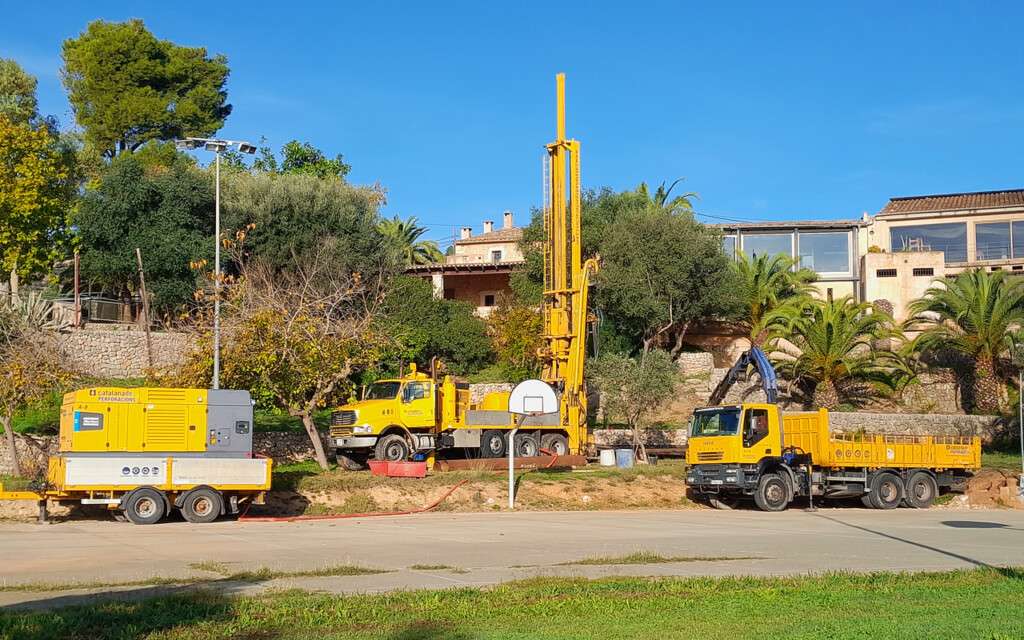
We operate with our own equipment, tailored to the specific characteristics and requirements of each project, thereby ensuring the highest standards of professionalism and quality in execution.
Our objective is to provide solutions that guarantee a constant, reliable and sustainable water supply.
The importance of water
Water is an essential resource for the development of any human activity. However, climate change and the increasing frequency of drought periods are putting pressure on the availability and management of water resources. In this context, having a well properly constructed not only provides autonomy and cost savings, but also contributes to a more efficient and responsible use of water.
Therefore, it is essential to rely on professionals who understand the ground conditions, geology and the most suitable drilling techniques. Especially in an environment where climate variability is increasing, every drop of water is more valuable than ever.
WORK PROCESS
Hydrogeological study and definition of the drilling location
Every well construction project begins with a preliminary hydrogeological study, which enables us to identify the presence of aquifers, determine their depth, and estimate the available yield as well as the potential quality of the water.
During this phase, the site geology is also analysed to determine the type of ground to be drilled, select the most appropriate method, and anticipate potential technical challenges.
This study is essential to ensure that the well will be productive, sustainable, and tailored to the actual needs of the project.
Well Drilling
Drilling works are the core phase of the project.
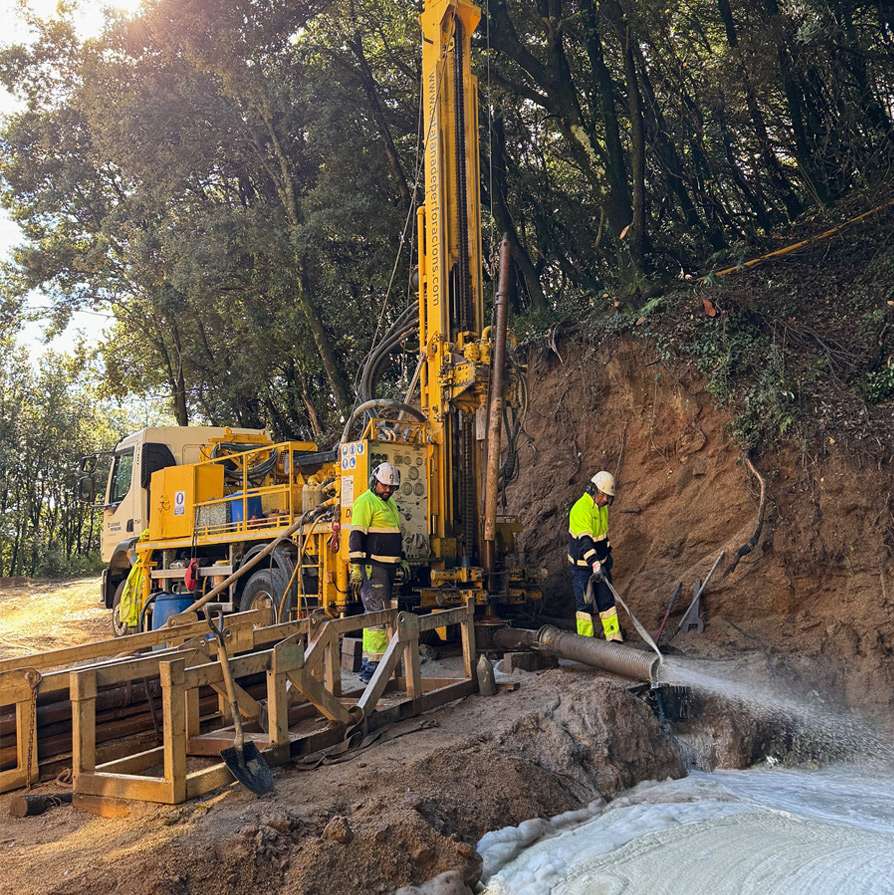
They are carried out using the most suitable technique depending on the characteristics of the subsoil, such as down-the-hole hammer drilling, dual rotary systems, reverse circulation drilling, or the Symmetrix® system.
During the process, drilling cuttings are continuously monitored in order to produce the corresponding lithological profile, as well as to identify the different water inflows and assess their quality and the yield obtained.
The objective is to confirm the existence of an aquifer level and to gather the necessary information to design the well completion in the most optimal way.
Installation of casing, filters and sealing
Once the aquifer has been reached, the installation of the casing, filters and sealing system is carried out.
Depending on the requirements to be met and the results of the well drilling, the necessary enlargements will be undertaken to ensure the well is lined with the most appropriate diameter.
The most suitable casing type (steel, PVC, stainless steel, etc.) will be selected, with the screened sections positioned at the depths defined during the investigation phase. Gravel packs and/or sealing materials will be placed in the annular space between the casing and the borehole wall.
Once the well has been cased, it is cleaned and developed using an air‑lift system, with the aim of removing sediments or particles deposited at the bottom and/or in the vicinity of the well, until clear water is obtained.
Well development and pumping test
To determine the optimal exploitation yield of the well, a pumping test will be carried out using a submersible pump, water level probe and generator set. During the test, data are recorded on the evolution of the dynamic water level in relation to both flow rate and time.
The analysis of these data will enable us to understand the characteristics of the aquifer and, at the same time, to properly size the optimal equipment and define an operating regime that ensures the protection and long-term sustainability of the aquifer, taking into account the actual water demand.
Final equipment, commissioning and documentation
In the final phase of the project, the installation of the pumping equipment and the corresponding pumping system is carried out, configured in the most optimal way to ensure the supply of water with the required quantity and quality.
All technical documentation is provided and, where necessary, we support the client throughout the final legalisation process.
The well is ready for operation!

DEPTH
– Maximum depth: up to 900m

DIAMETER:
– Maximum diameter: 610mm

GROUND:
Consolidated formations of granite, limestone and sandstone.
Aplications
- Municipal water supply
- Lowering of the water table in civil engineering works
- Open-loop geothermal wells
- Aquifer decontamination
- Water abstraction for irrigation, livestock and industrial processes