Peninsula-Ceuta Electrical Interconnection: Four drilled crossings connecting a territory

Date
June - November | 2024

Type of installation
Electricity

Pipe
HDPE

Drilling length
2 x 307m + 2 x 513m

Soil
Heterogeneous and rocky

Location
Peínsula - Ceuta | Playa de la Hacienda - La Línea de la Concepción
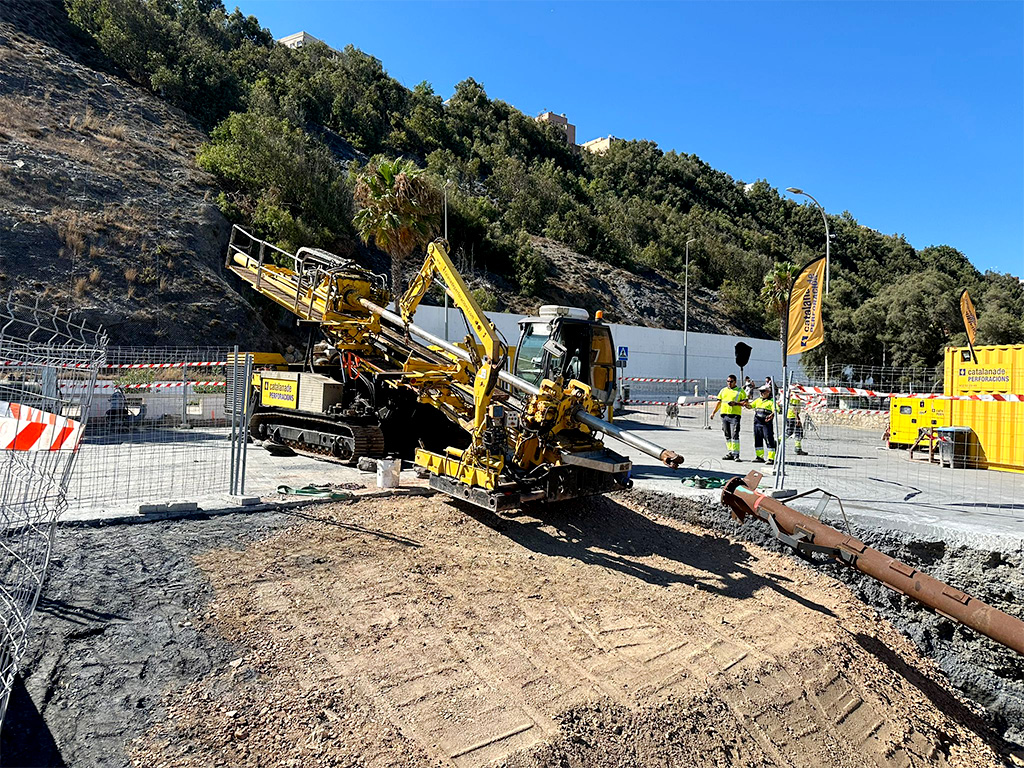
Catalana de Perforacions has carried out the four Horizontal Directional Drilling crossings that make the land-to-sea transition of the new electrical link between mainland Spain and Ceuta possible, a strategic infrastructure project designed to ensure a safer, more efficient and more sustainable power supply.
The future electrical interconnection between mainland Spain and Ceuta will mark a turning point in the autonomous city’s energy system. The new link will strengthen the security of electricity supply, improve integration with the mainland grid and support the greater incorporation of renewable energy sources.
As part of this strategic project promoted by Red Eléctrica (Redeia) and delivered by Prysmian as the main contractor for the submarine cable link, Catalana de Perforacions was responsible for executing the four drilled crossings using Horizontal Directional Drilling (HDD), enabling the connection between the onshore infrastructure and the future submarine cable at both La Línea de la Concepción and Ceuta.
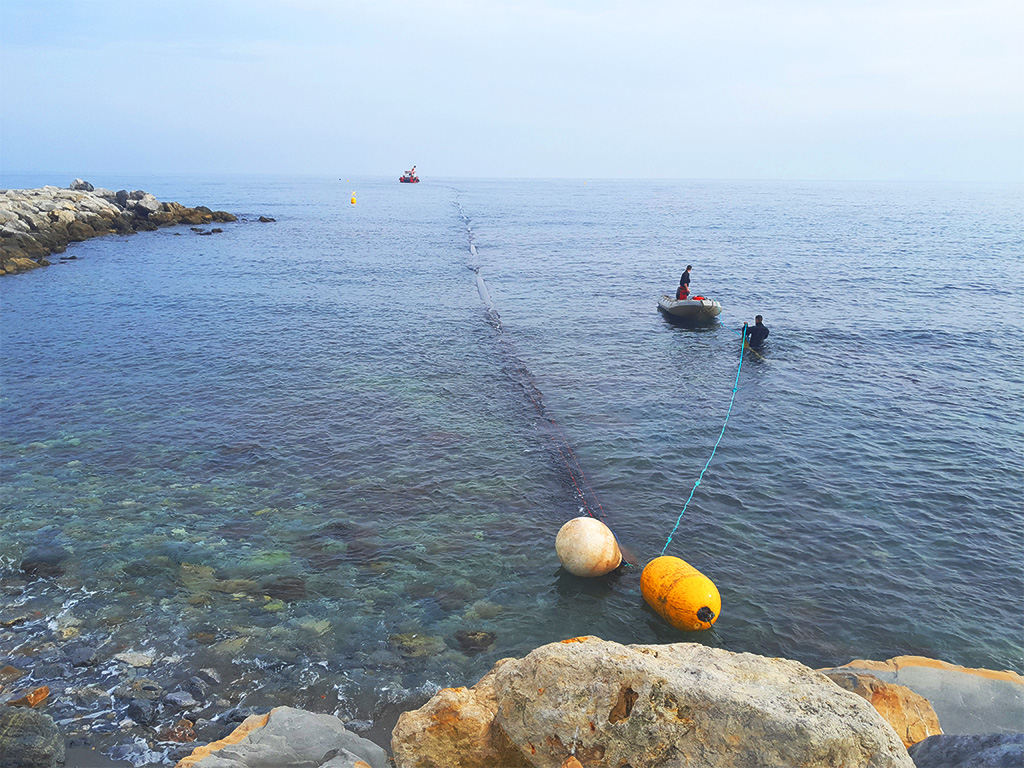
This is a decisive phase of the project, as it enables the land-to-sea transition to be completed entirely underground, avoiding any direct intervention on the beaches and preserving the coastal environment.
A solution with no impact on beaches or the coastal environment
The project involves the installation of two submarine electrical circuits spanning approximately 58 kilometres across the Strait of Gibraltar to connect both power systems. The transition between the onshore infrastructure and the submarine cable had to be delivered while ensuring maximum technical reliability and minimising impact on the coastline.
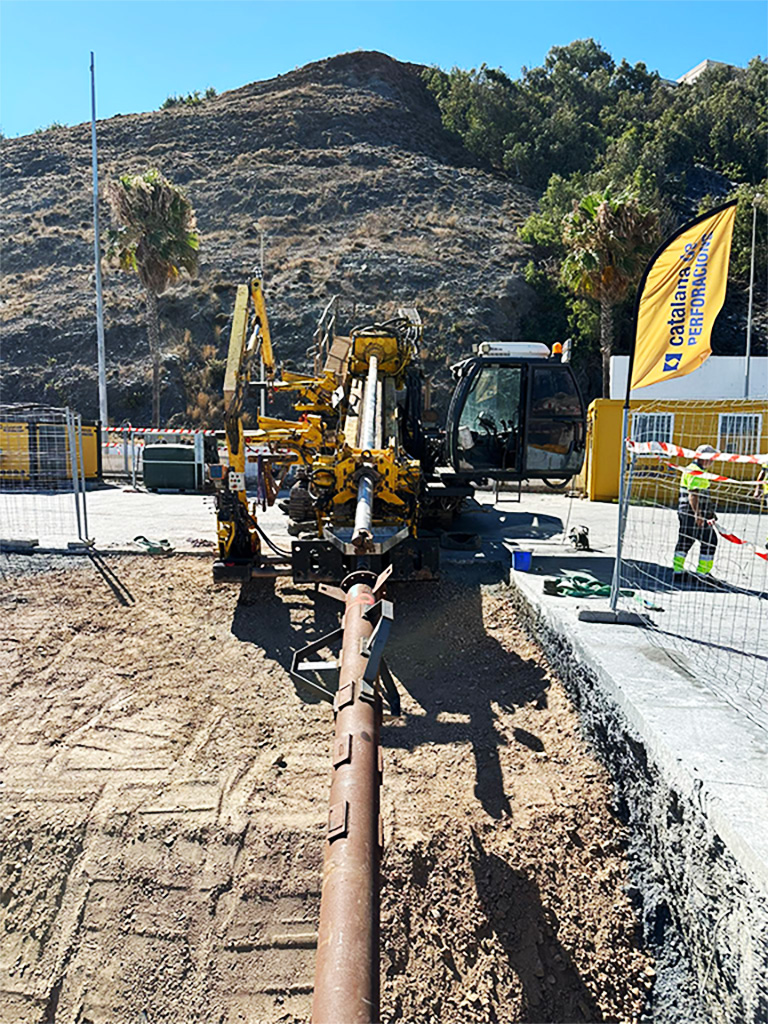
To achieve this, a Shore Approach solution using Horizontal Directional Drilling was selected, a technology that enables the crossing to be installed entirely underground from the shoreline to the offshore exit point.
Thanks to this solution, it was possible to install the conduits required for the future electrical cable installation without excavating trenches across the beaches or altering the coastline, reducing the impact on the natural environment to a minimum during construction.
Four drilled crossings link La Línea de la Concepción and Ceuta
As Prysmian’s subcontractor, our involvement in the project included the execution of four horizontal directional drillings distributed across both ends of the electrical interconnection.
In La Línea de la Concepción, we completed two parallel drillings measuring 303 and 307 metres in length. The first enabled the installation of a PE100 SDR11 Ø160 mm conduit through a Ø250 mm pilot bore, without the need for any reaming stages. The second was designed for the installation of a PE100 SDR17 Ø900 mm conduit and required four reaming stages to reach a final diameter of Ø1,219.2 mm.
In Ceuta, we completed a further two land-to-sea drillings of 512 and 513 metres, each accommodating a PE100 SDR11 Ø500 mm conduit. The drillings started with a Ø216 mm pilot bore and were progressively enlarged to reach a final diameter of Ø686 mm.
Overall, our involvement resulted in the execution of 1,635 metres of Horizontal Directional Drilling, distributed across both shores of the interconnection.
Different geological conditions at each end of the interconnection
Although all four drillings formed part of the same project, geological conditions differed significantly at each end of the interconnection.
In La Línea de la Concepción, the first section of the drilling passed through heterogeneous ground. As a result, it was necessary to install steel casings to ensure ground stability before commencing the HDD works.
In Ceuta, by contrast, the drilling was carried out entirely through rock formations, a condition that required continuous adjustment of drilling parameters and permanent monitoring of the bore path to ensure accurate alignment up to the planned offshore exit point on the seabed.
The ability to adapt our working methodology to such different geological conditions was one of the key factors behind the successful completion of all four drillings.
Engineering tailored to a highly complex environment
The works were carried out in an environment that was particularly sensitive from both a technical and environmental perspective.
Proximity to the sea, the geological variability characteristic of the Strait of Gibraltar, and the need to coordinate activities with the other phases of the project required highly precise planning and continuous monitoring throughout execution.
Each drilling was designed to maintain ground stability, ensure the specified bend radius and facilitate the subsequent installation of the conduits without compromising either infrastructure safety or the surrounding natural environment.
This type of work requires a combination of technical expertise, geological knowledge and on-site adaptability to respond effectively to any conditions encountered during drilling.
A decisive step towards the energy transition
With the completion of these works, we add another strategic project to our experience in delivering Shore Approach solutions.
Our involvement in the new electrical interconnection between mainland Spain and Ceuta reinforces our capability to deliver critical infrastructure projects, adapting to very different geological conditions while providing trenchless solutions that combine precision, reliability and reduced environmental impact.
Each new project enables us to expand our experience in landfalls and further strengthen our expertise in HDD solutions for landmark energy infrastructure developments.
Frequently Asked Questions
What works has Catalana de Perforacions carried out on the electrical interconnection between mainland Spain and Ceuta?
Catalana de Perforacions has executed the four Horizontal Directional Drilling crossings that enable the land-to-sea transition of the new electrical connection between mainland Spain and Ceuta.
The works were distributed between La Línea de la Concepción and Ceuta, with a total drilling length of 1,635 metres, providing the conduits that will house the future submarine cable.
Why was Horizontal Directional Drilling used for this project?
The Shore Approach solution using HDD enabled the land-to-sea crossings to be installed entirely underground, avoiding trenches across the beaches and minimising impact on the coastline. This technology made it possible to install the conduits required for the submarine link while preserving both the shoreline and the marine environment.
What technical challenges were encountered during the drilling works?
The drillings were carried out under very different geological conditions at each end of the interconnection.
In La Línea de la Concepción, the initial section had to be stabilised using steel casings, while in Ceuta the works were performed in rock formations, requiring drilling parameters to be constantly adjusted and the bore path continuously monitored to ensure accurate alignment.
What benefits will the new electrical interconnection between mainland Spain and Ceuta provide?
The new infrastructure will connect Ceuta’s electrical system to the mainland grid, improving the security and reliability of electricity supply. It will also facilitate greater integration of renewable energy sources and reduce dependence on local power generation, contributing to a more efficient and sustainable energy system.