Crossing the oil pipeline beneath the runways of Adolfo Suárez Madrid-Barajas Airport

Date
August of 2012

Type of installation
Pipeline

Pipe

Drilling length
1 x 642 ,63 m / 1 x 640 m y 1 x 650 m

Soil
Clays, silts and gravels

Location
Madrid (Spain)
We have completed one of the most complex HDD crossings on the new oil pipeline serving Adolfo Suárez Madrid-Barajas Airport.
A key project for a strategic infrastructure
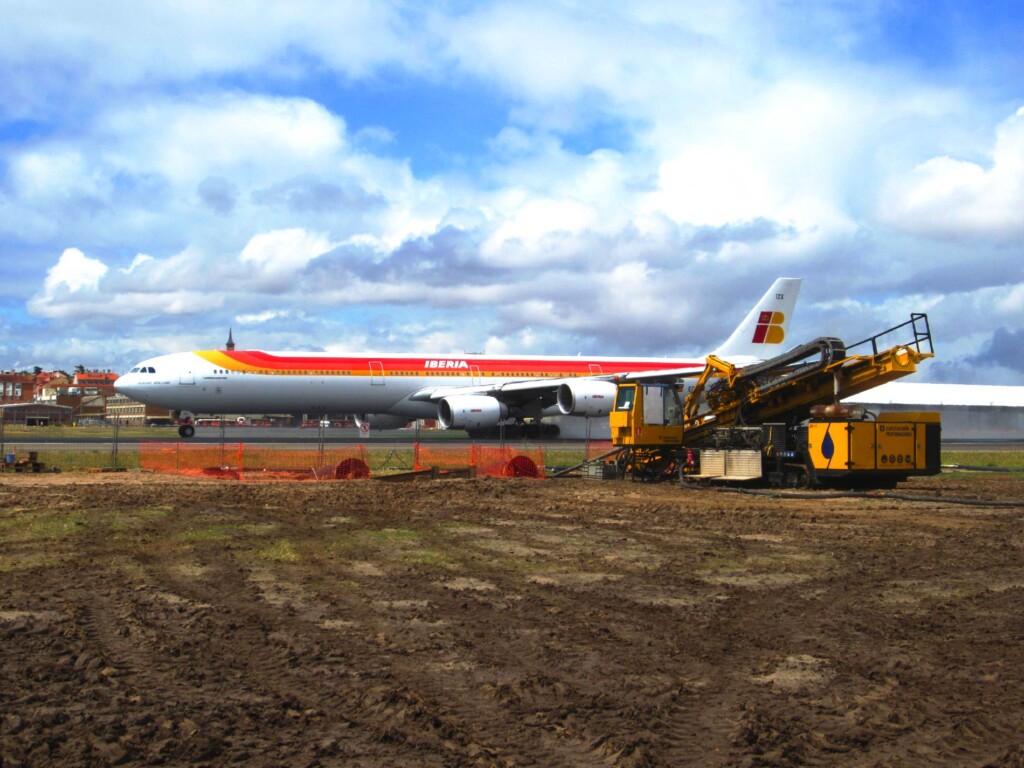
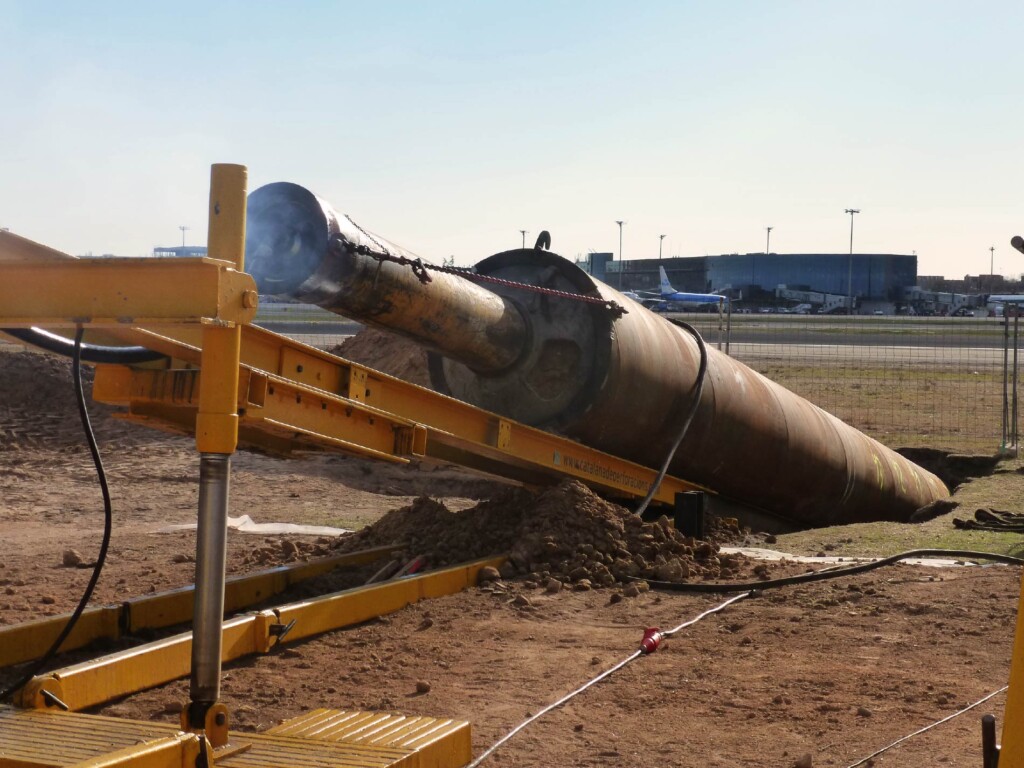
At Catalana de Perforacions, we have successfully completed the installation of the new oil pipeline crossing beneath the runways of Adolfo Suárez Madrid-Barajas Airport, one of the most technically demanding sections of this strategic infrastructure designed to supply fuel to Spain’s busiest airport.
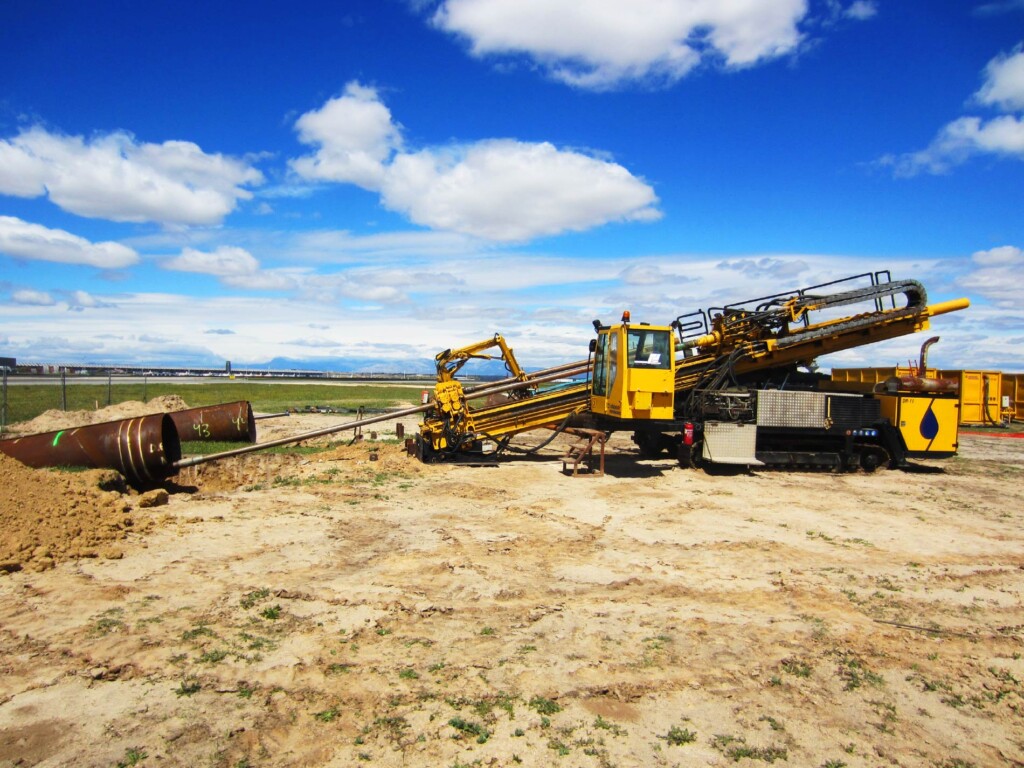
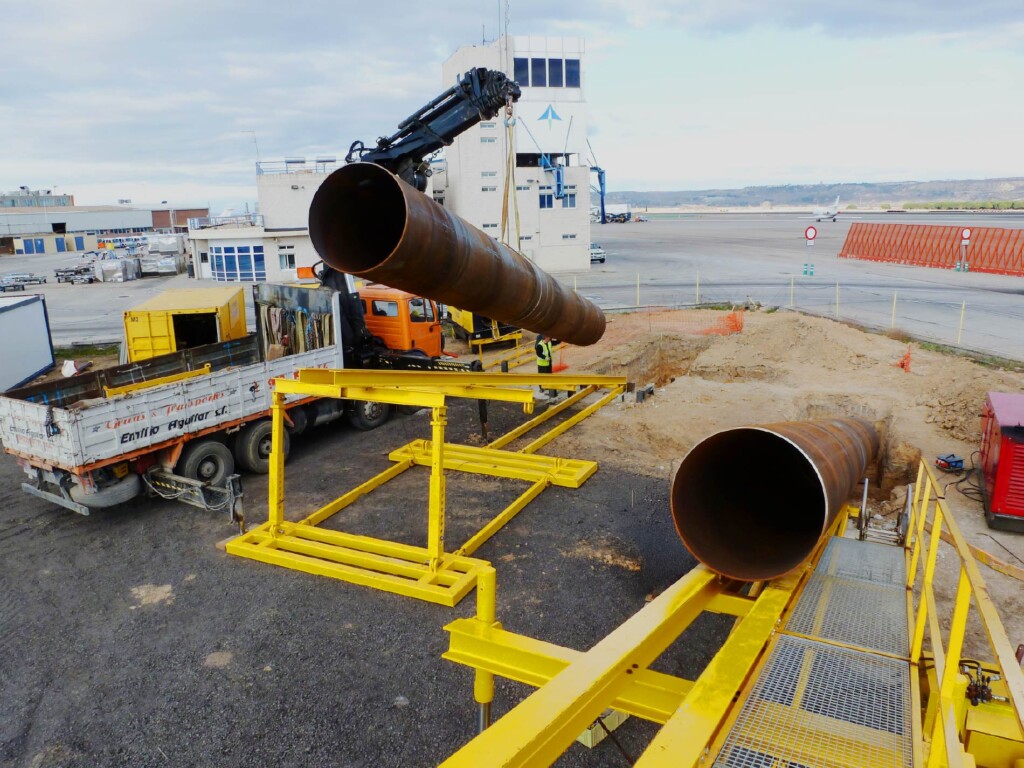
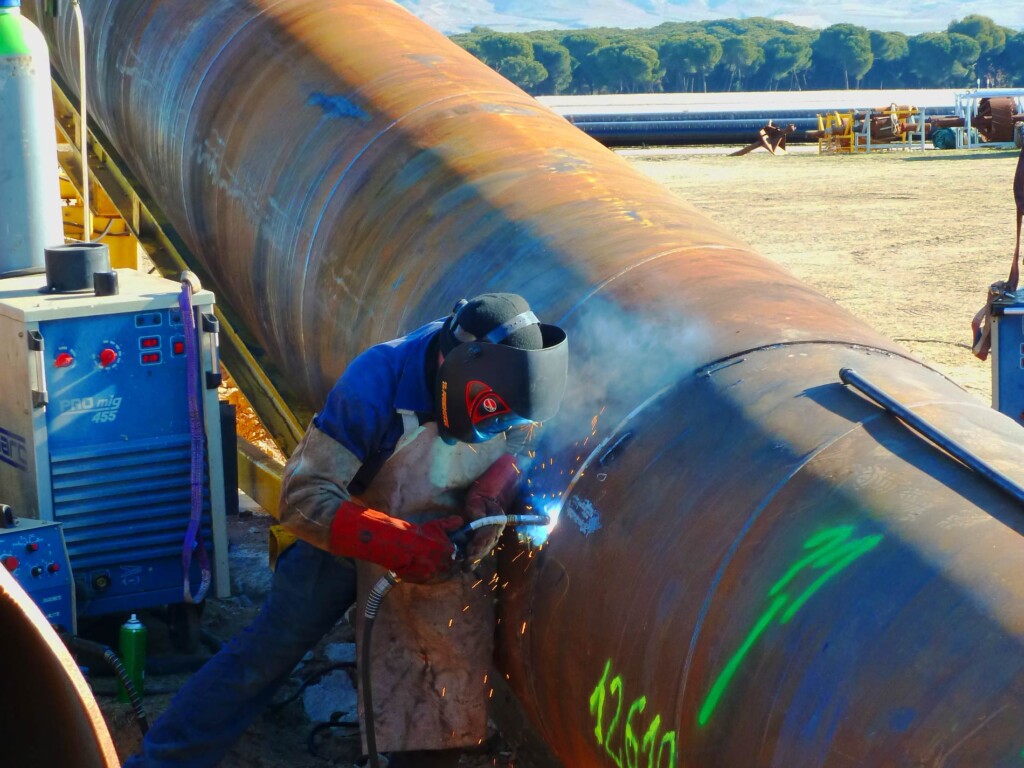
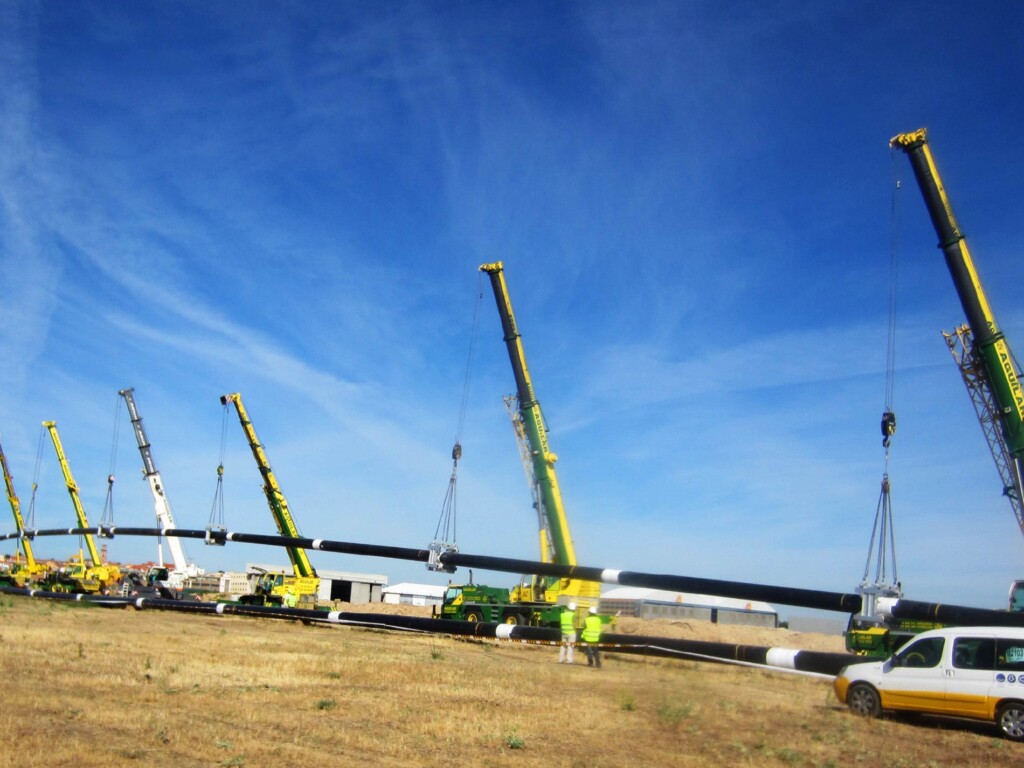
Our role in the project involved the execution of three Horizontal Directional Drilling (HDD) crossings, each approximately 650 metres long, to install two 24-inch steel pipelines and one auxiliary 5-inch pipeline. Delivering the project required meticulous planning, precision and the ability to adapt to the actual ground conditions encountered during construction.
Technical planning tailored to the project's requirements
Every Horizontal Directional Drilling project begins long before the drilling rig arrives on site.
In this case, the preliminary work was essential to define the drilling alignment, assess the site’s geological conditions and establish the most suitable construction strategy for a project of this length and technical complexity.
Ground investigations and bore path design made it possible to plan every stage of the operation, from the pilot bore through the reaming stages to the final pullback of the pipelines.
This initial planning provided the foundation for the project, although experience shows that every HDD crossing develops differently once drilling begins.
Adapting the construction process to actual ground conditions
One of the defining aspects of the project was the behaviour of the ground during construction.
As drilling progressed, highly compact gravel layers and large cobbles were encountered, creating challenges during several phases of the works, particularly when installing the steel casings and advancing through certain sections.
These conditions required us to adapt our drilling methodology at different stages of the project. Modifying drilling tools, optimising cleaning processes and reviewing operational procedures enabled us to maintain full control of the bore and continue progressing under the best possible conditions.
The ability to interpret ground behaviour and make technical decisions throughout construction was one of the key factors behind the successful completion of the works.
Maintaining accuracy throughout the drilling process
On projects of this scale, maintaining the planned drilling alignment is just as important as the drilling operation itself.
Throughout construction, the bore path was continuously monitored using advanced guidance and navigation systems, verifying the position of the drill head and making any necessary corrections to ensure the designed alignment was maintained.
Another key aspect of the project was drilling fluid management. Preparing, recycling and centrifuging the drilling mud ensured bore stability while optimising equipment performance throughout the different construction phases.
Another project strengthening our HDD experience
With the successful completion of this project, we have added another reference to our experience in Horizontal Directional Drilling for strategic infrastructure.
This crossing demonstrates the importance of combining rigorous planning with the flexibility required to respond to real site conditions. Every project presents new geological and construction challenges, and providing the right technical solution is a fundamental part of our way of working.
The new oil pipeline serving Adolfo Suárez Madrid-Barajas Airport is an excellent example of how HDD technology makes it possible to complete long-distance crossings with precision and reliability, even in environments where engineering, planning and execution control are critical to project success.
Frequently Asked Questions
Why was Horizontal Directional Drilling used for this project?
Horizontal Directional Drilling (HDD) enabled the oil pipeline to be installed completely underground beneath the runways of Adolfo Suárez Madrid-Barajas Airport, avoiding disruption to airport operations while ensuring the pipelines were installed safely and accurately.
What are the advantages of Horizontal Directional Drilling for crossing critical infrastructure?
HDD technology allows pipelines to be installed beneath infrastructure such as airports, roads and railway lines without open-cut excavation, reducing surface disruption while keeping the infrastructure fully operational throughout construction.
What is Horizontal Directional Drilling and when is it used?
Horizontal Directional Drilling (HDD) is a trenchless construction technique used to install underground pipelines and utilities. It is particularly suitable for crossing critical infrastructure or environmentally sensitive areas where conventional excavation is not feasible, including airports, roads, rivers and railways.