Celtic Interconnector: HDD Engineering for the connection between France and Ireland

Date
October 2023 - March 2024

Type of installation
Electricity

Pipe
HDPE

Drilling length
3 x 440 m

Soil
Hard rock

Location
Kerradenec, France
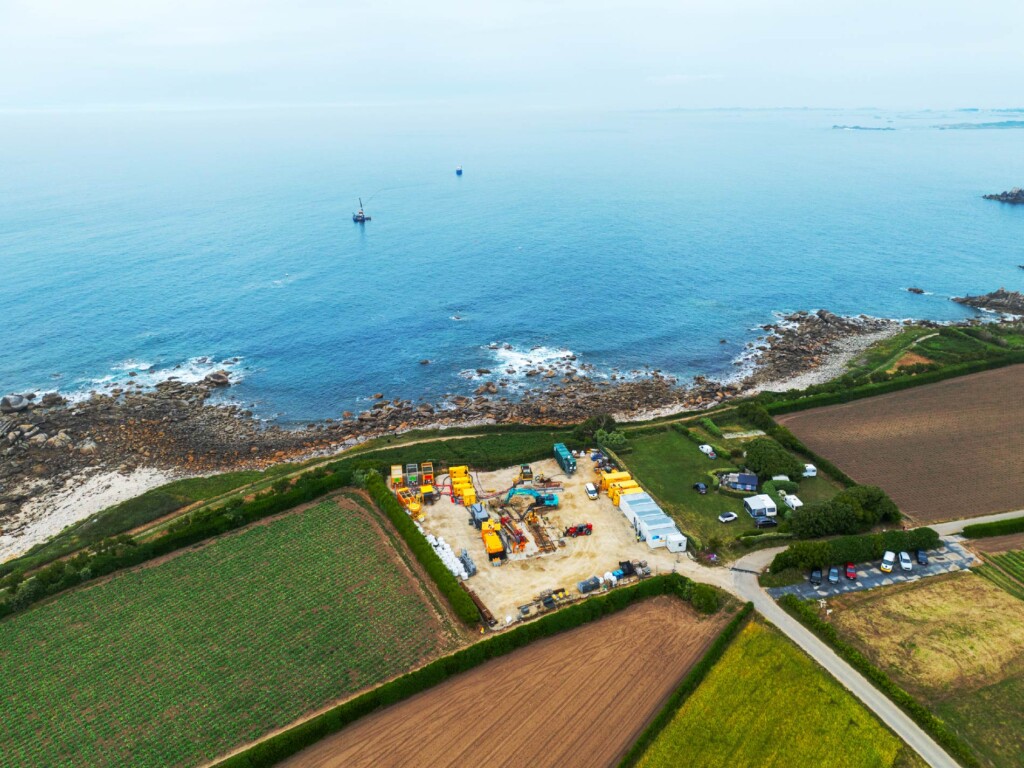
We have reached a new international milestone following the completion of the landfall works for the Celtic Interconnector project in France, one of the most significant energy infrastructures currently being developed in Europe.
Connecting France and Ireland through a subsea electrical infrastructure is one of the major engineering challenges currently being undertaken in Europe.
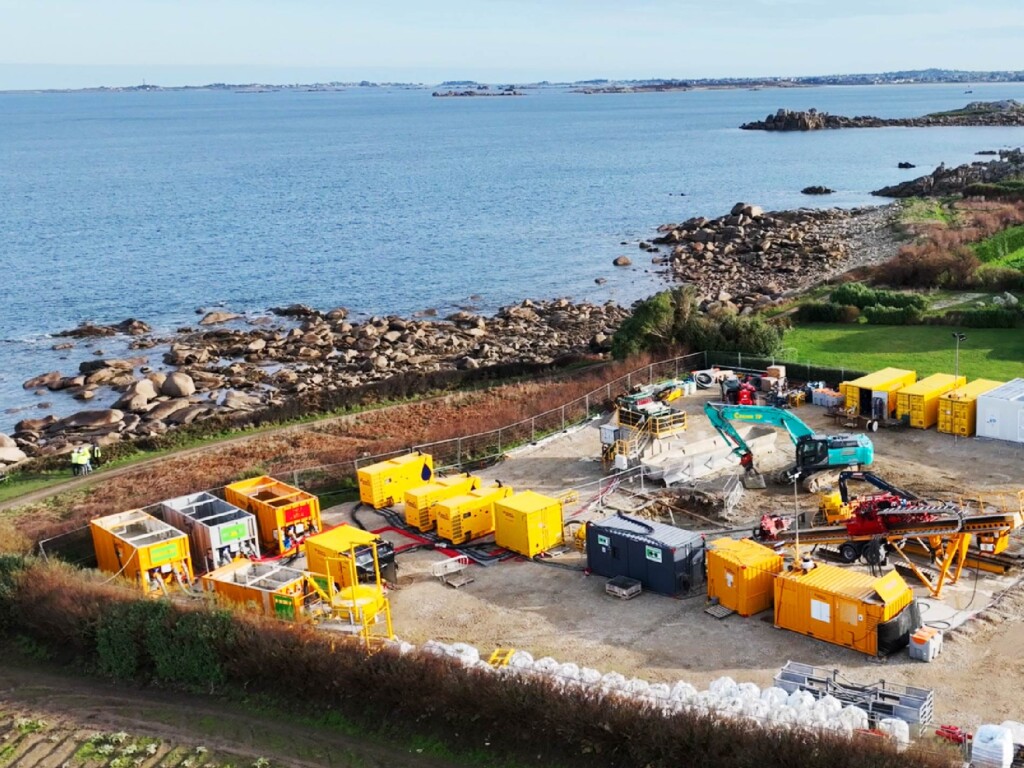
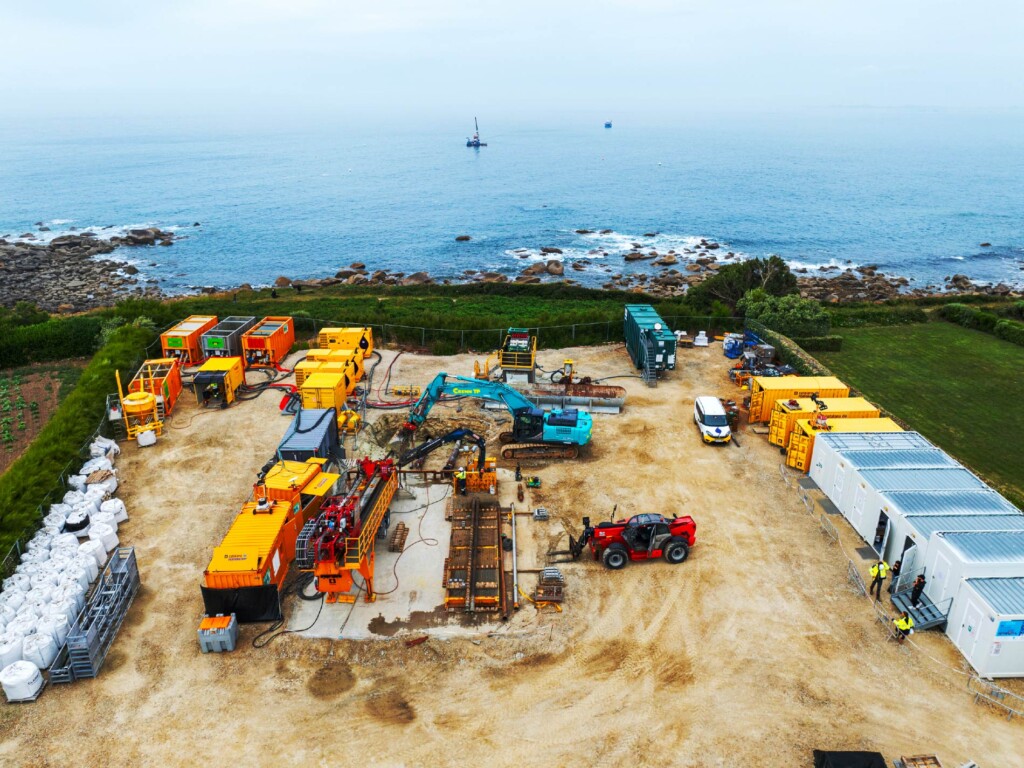
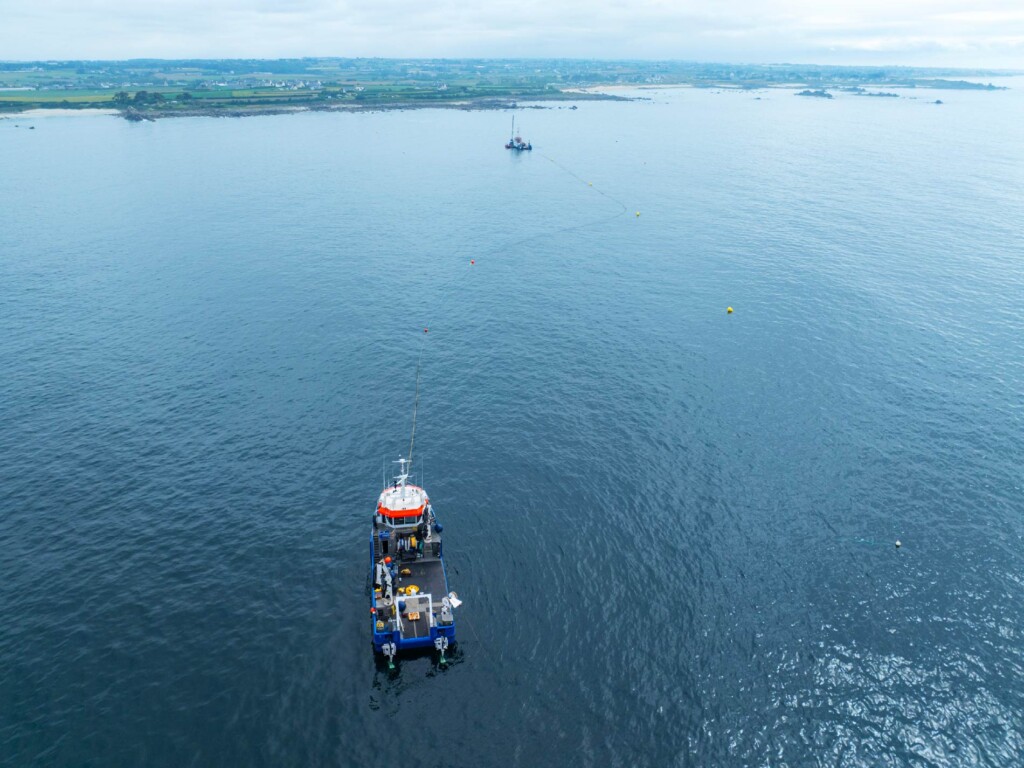
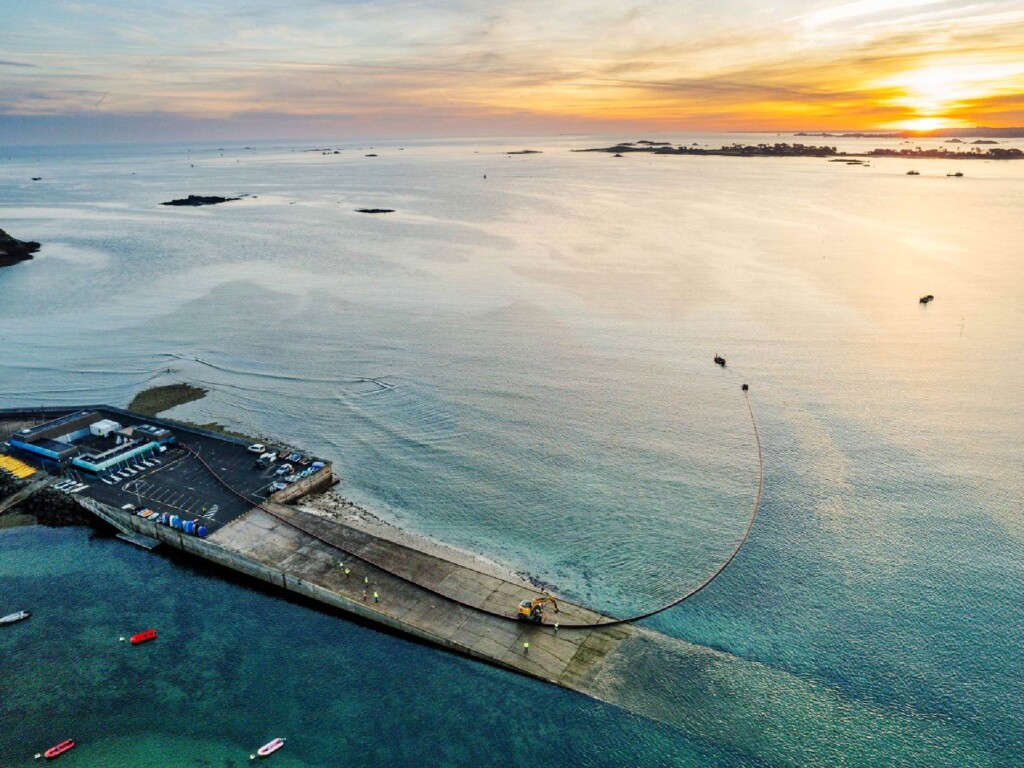
In this context, Catalana de Perforacions has carried out the Horizontal Directional Drilling works for Nexans corresponding to the French landfall of the Celtic Interconnector, a key operation enabling the transition between the onshore infrastructure and the subsea section of the interconnection.
What is the Celtic Interconnector?
The Celtic Interconnector is a strategic electricity interconnection project that will link France and Ireland through a high-voltage direct current (HVDC) subsea connection. With an approximate length of 575 kilometres, of which nearly 500 kilometres run beneath the sea, it will enable the transmission of up to 700 MW of electricity between the two countries, strengthening security of energy supply and supporting greater integration of renewable energy into the European electricity network.
Our involvement in the project
As a subcontractor to the project, we were responsible for carrying out the Horizontal Directional Drilling works for the French landfall, the point where the onshore infrastructure connects with the subsea section of the Celtic Interconnector.
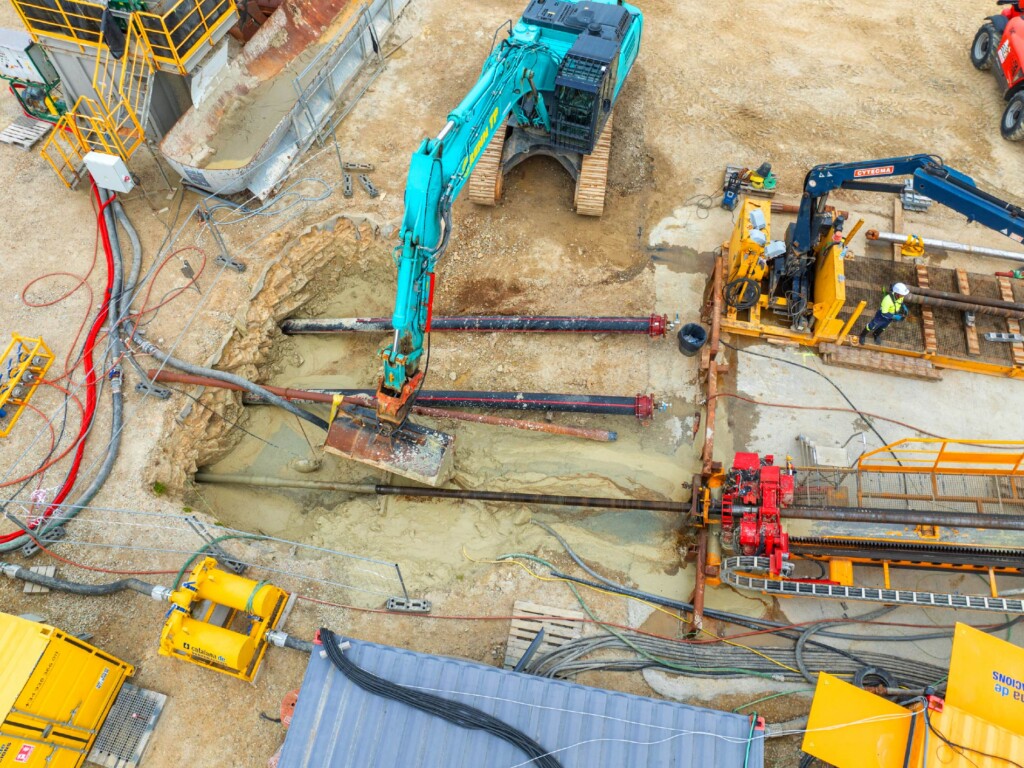
Our scope of work consisted of the execution of three 440-metre Horizontal Directional Drilling crossings, intended for the installation of two HDPE Ø355 mm ducts and one HDPE Ø250 mm duct, which will accommodate the future electrical interconnection cables.
This is a particularly critical phase of the project, as the accuracy of each bore directly determines the success of the connection between the onshore infrastructure and the subsea section.
A landfall executed entirely in hard rock
The main technical challenge of the project was the execution of the three drillings through hard rock ground conditions.
This type of geology requires the continuous adjustment of drilling parameters, optimisation of excavation processes and permanent monitoring of the bore path to ensure borehole stability and achieve the planned exit point on the seabed with precision.
The combination of thorough planning, specialised equipment and continuous monitoring throughout all drilling phases made it possible to complete the works while maintaining the high standards of quality and accuracy required for a strategic infrastructure of this nature.
Horizontal Directional Drilling: the solution for executing a landfall
Landfalls are among the most demanding applications of trenchless engineering. These operations make it possible to connect onshore and subsea infrastructures while avoiding open-cut excavations along the coastline and minimising environmental disturbance.
For this project, we employed Horizontal Directional Drilling, a technology that enables the crossing to be completed entirely underground, preserving both the coastline and the seabed.
In addition to minimising environmental impact, this solution provides a high level of execution accuracy, an essential requirement when working on large-scale energy projects such as the Celtic Interconnector.
Strengthening our experience in Shore Approach projects
The completion of the Celtic Interconnector works represents a new milestone in the international growth of Catalana de Perforacions and strengthens our expertise in Shore Approach projects.
Participation in this type of strategic infrastructure demonstrates our ability to undertake highly complex technical projects, adapting to demanding geological conditions and delivering trenchless solutions that combine precision, reliability and reduced environmental impact.
Each new project broadens our experience and reinforces Catalana de Perforacions’ commitment to the development of landmark energy infrastructures across Europe.
Frequently Asked Questions
What works has Catalana de Perforacions carried out on the Celtic Interconnector?
As a subcontractor to the project, Catalana de Perforacions carried out the Horizontal Directional Drilling works corresponding to the French landfall of the Celtic Interconnector.
Our scope of work consisted of the execution of three 440-metre drillings for the installation of two HDPE Ø355 mm ducts and one HDPE Ø250 mm duct, intended to accommodate the future electrical interconnection cables.
What were the main technical challenges of the French landfall?
The main challenge was the execution of the three drillings entirely through hard rock ground conditions. These geological conditions required continuous bore path monitoring, ongoing adjustment of drilling parameters and precise planning to ensure borehole stability and reach the planned exit point on the seabed.
What is a landfall or Shore Approach?
A landfall, also known as a Shore Approach, is the connection between an onshore infrastructure and a subsea section using trenchless technologies. This type of operation is used in electrical cable, telecommunications, gas pipeline, oil pipeline and submarine outfall projects to minimise impact on the coastline and preserve the natural environment.