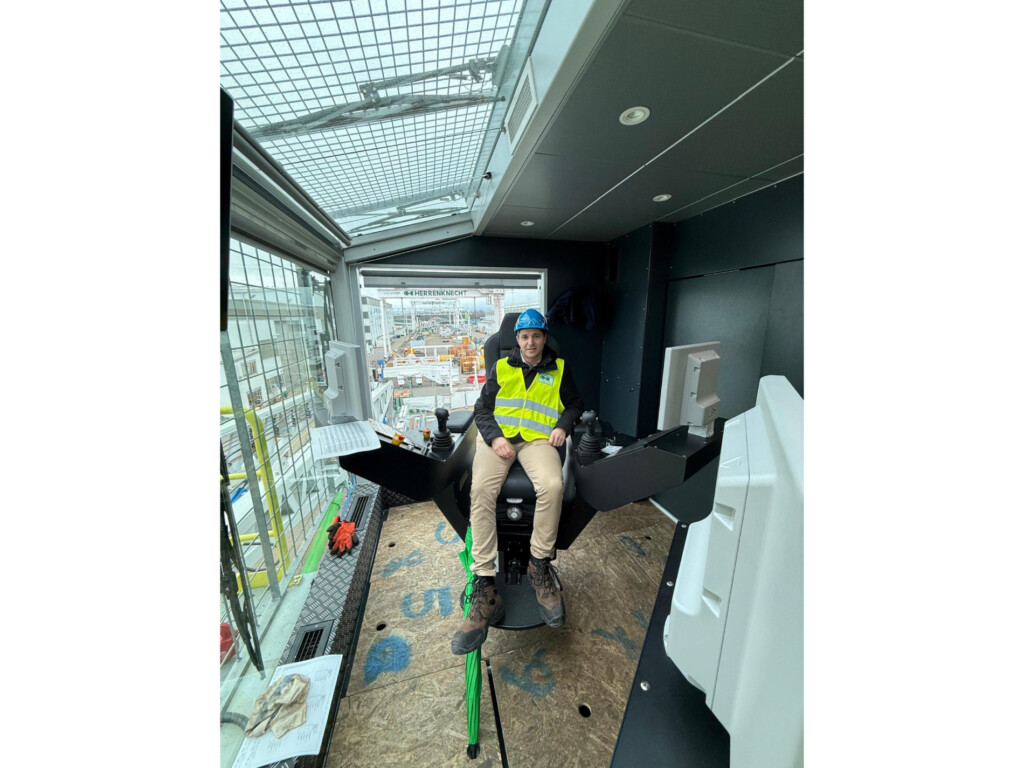
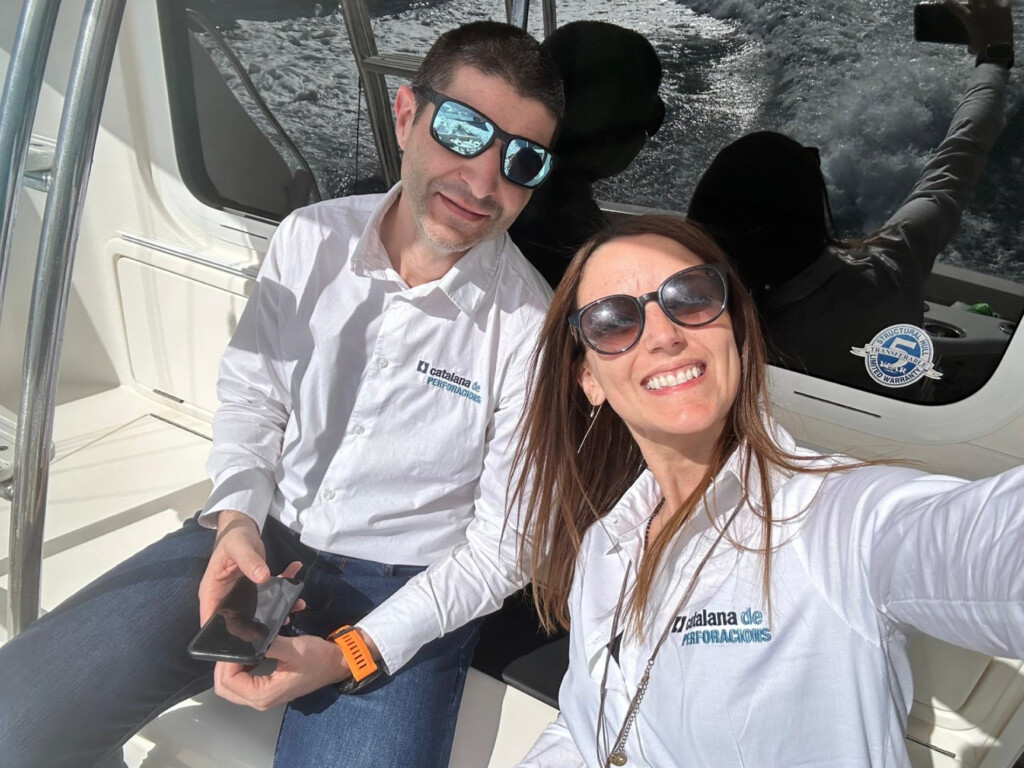
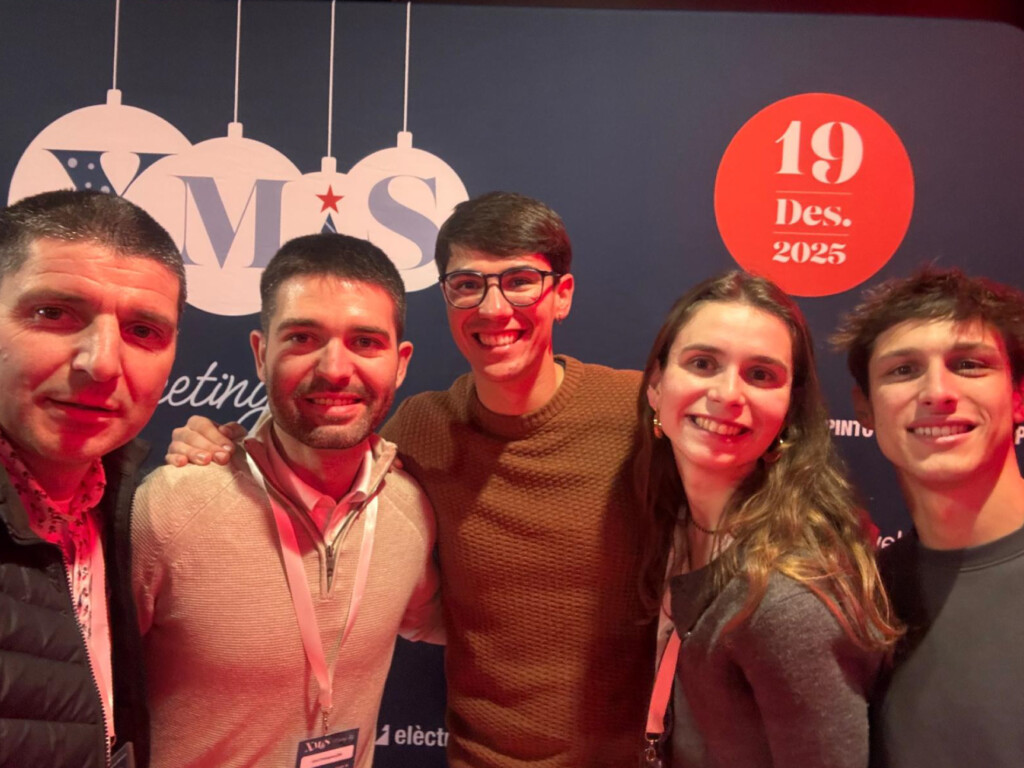
26 years of experience, projects around the world and an approach to engineering based on anticipation, experience and teamwork. We speak with Jordi Camps about the challenges that have shaped his career and how he sees the future of engineering applied to drilling.
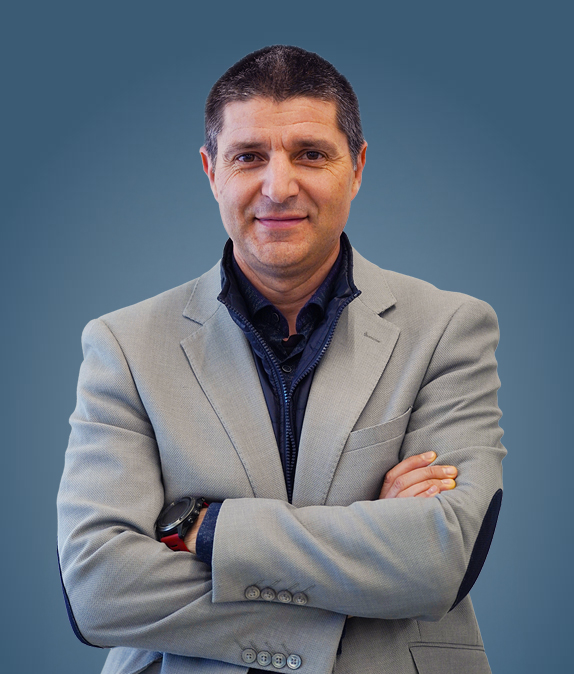
“Interestingly, the projects that have left the greatest impression on me are those that presented us with the biggest challenges”
Projects do not begin when the machinery arrives on site, but much earlier. Every drilling operation requires rigorous planning, thorough technical analysis and the ability to anticipate the challenges that may arise during execution.
Today, we speak with Jordi Camps, Head of Engineering Office at Catalana de Perforacions, to learn more about his career and his approach to engineering. We talk about experience, decision-making, teamwork and the role of the Engineering Office in analysing each project, anticipating its constraints and turning technical challenges into viable solutions.
Before we begin...
📍 Position: Head of Engineering Office
🎓 Education: Technical Industrial Engineer in Mechanical Engineering and Engineer in Industrial Organisation
📅 Years with the company: 26 years
🌍 Languages: Catalan, Spanish, English
We speak with Jordi
❓ To begin with, who is Jordi Camps? How would you describe yourself in a few words, both at work and outside of it?
At work, I consider myself a methodical, responsible person who is committed to both my work and my colleagues. I enjoy and am passionate about making things happen, especially turning ideas into reality.
I enjoy working as part of a team, helping others and contributing ideas. In this respect, I like to think that my perspective and experience help to give designs and projects a clearer focus, while also avoiding confusion and a lack of direction.
On a personal level, I am a simple, family-oriented person with few pretensions. I enjoy spending my free time doing outdoor activities as well as working on things with my hands. I am quite private and do not particularly like being in the public eye. I prefer a quiet and enriching conversation, whatever the subject.
❓ Had you always known that you wanted to pursue engineering, or was it a vocation you discovered over time?
Engineering has always been part of my everyday life. I have always been a science-minded person; the humanities and, particularly, languages were where I struggled. I was never a top student, but I passed my subjects respectably.
My father, who was a bricklayer by profession, taught me from a very young age to think about how things, jobs or activities could be done more efficiently and how we could work better. At the same time, he would ask me questions that he himself did not know how to answer because he lacked the tools or knowledge.
That is precisely what fascinated me about engineering: thinking ahead about what needs to be done so that, as we used to say, we could work less and achieve more.
❓ What are you most passionate about in your work? Is there a particular project that you remember with special satisfaction?
I am passionate about the entire process: our team’s ability to think, organise, adapt, execute and deal with the different situations that arise. It is a strength that almost always allows us to stay ahead of adversity. And when adversity gets there first, it is about having the composure to think, reassess the situation and analyse what needs to change.
Many projects come to mind that I remember with particular satisfaction and which, for very different reasons, have shaped our journey and the way we approach new projects today.
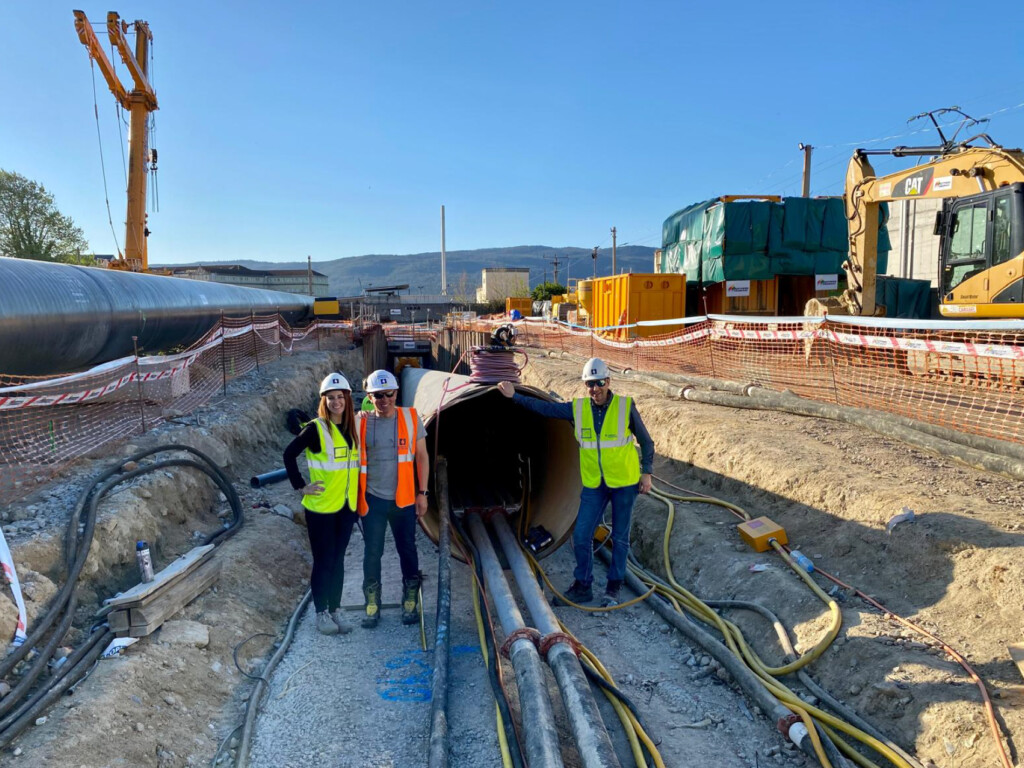
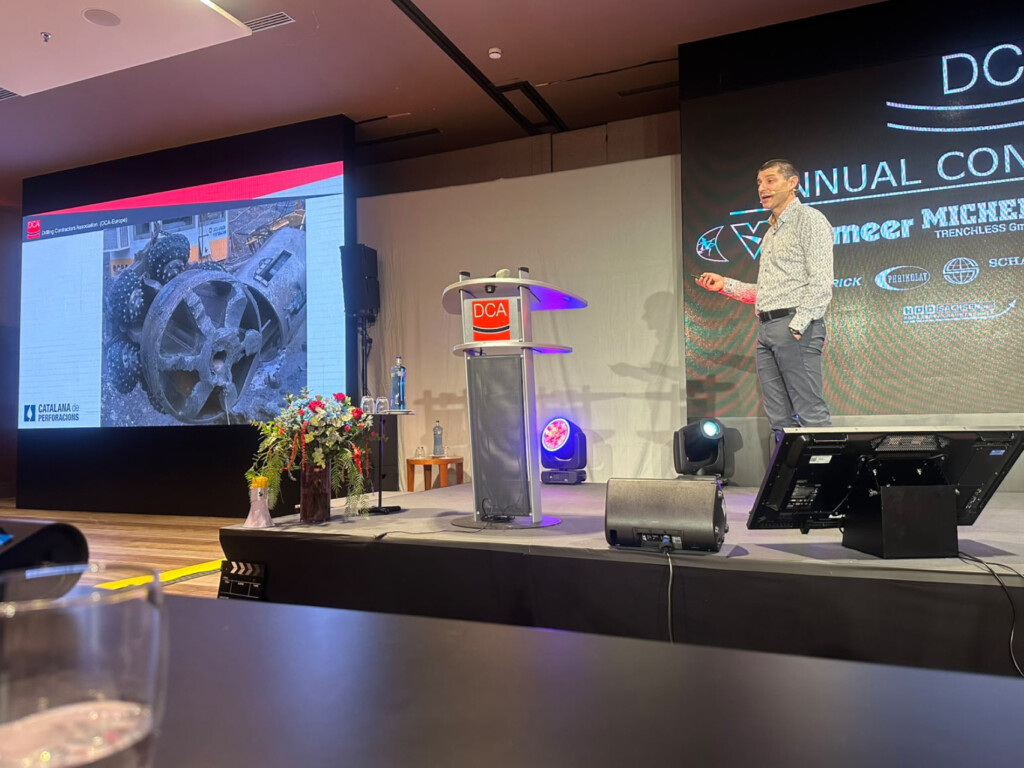
I remember, for example, the Bermeo outfall, where we had to carry out a recovery operation that we subsequently presented at various conferences and for which even some of our competitors congratulated us on the work we had done.
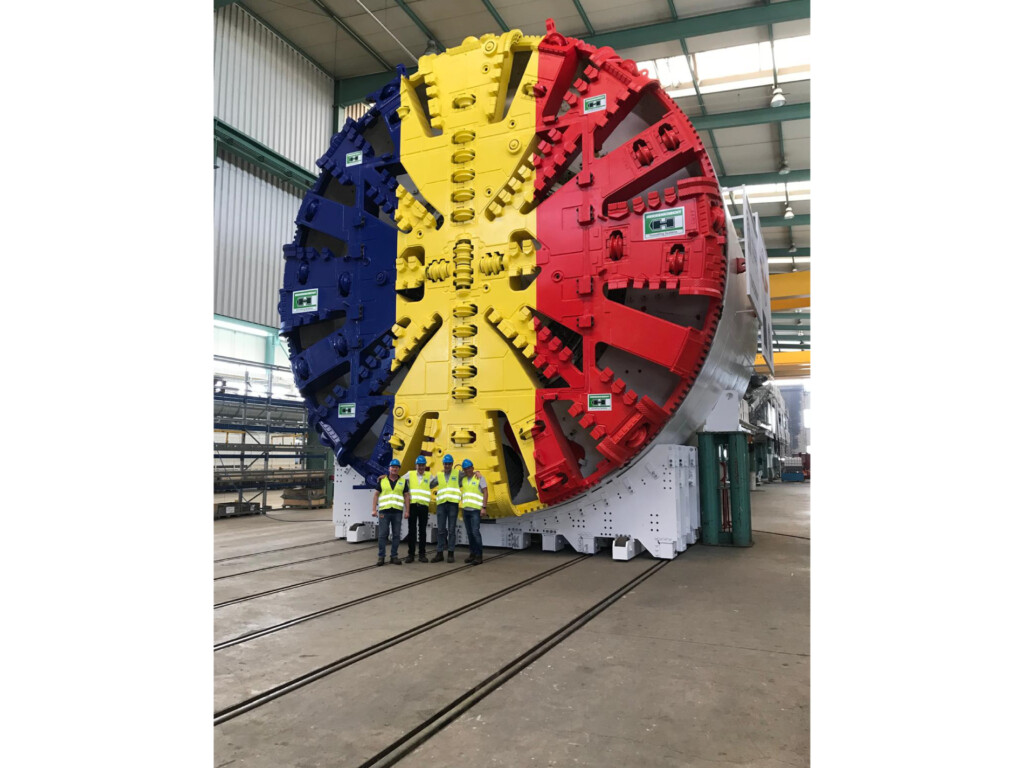
There were also the power lines from Gramenet to Besòs and from Nus Viari to the ZAL, as well as the electricity interconnection between Spain and France. These projects taught us how to work on large-scale operations, with multiple teams working simultaneously and the need to organise and coordinate a large number of resources.
Another project I remember particularly well is San Pedro del Pinatar, in Murcia, where we implemented the Neodren water collection system on a large scale, representing a technical challenge at every level.
And then there was Haiti, where we crossed the Rivière Grise to help supply drinking water to Port-au-Prince. We had to send two drilling rigs there and undertake a project that represented a major logistical, technical and human challenge.
In Australia, we worked to make the seawater intake system for a desalination plant in Gold Coast viable, taking our expertise in water collection systems to a project on the other side of the world.
And in Siurana, we faced a completely different challenge: drilling horizontally through the dam while the reservoir was half full to construct an intake that would provide better-quality water.
Interestingly, the projects that have left the greatest impression on me are those that presented us with the biggest challenges. Thanks to these experiences, today we have an invaluable range of resources and knowledge at our disposal.
❓Large-scale projects involve many different challenges. From the Engineering Office, what are the most critical aspects that need to be analysed before work begins on site?
We always say: “expect the unexpected”.
Today, the knowledge that the Catalana de Perforacions team has accumulated in areas such as geology, geotechnics, drilling operations, client relations and permit management makes it easier to tackle large-scale projects. The multidisciplinary team we have built over the years allows us to analyse each situation from different perspectives and make well-informed decisions.
If I had to highlight some of the most critical aspects, they would probably be geology and hydrogeology. Everything we can see above ground tends to be easier to control; many of the difficulties arise underground.
Having a thorough understanding of the ground allows us to adapt drilling techniques, anticipate potential difficulties and make better decisions during execution.
❓ In engineering, there is not always a single answer. When an unexpected challenge arises, how do you approach decision-making to find the best solution?
I particularly like this question. It is true that the same situation can be approached in many different ways, and this is where experience is key.
For me, it is important that the entire team is involved in the decision-making process. This allows us to analyse the problem from different perspectives and enables what initially seemed like different solutions to ultimately converge into one complete, shared solution.
❓ Innovation has always been one of the pillars of Catalana de Perforacions. Which technologies or trends do you think will shape the future of engineering applied to drilling and underground construction?
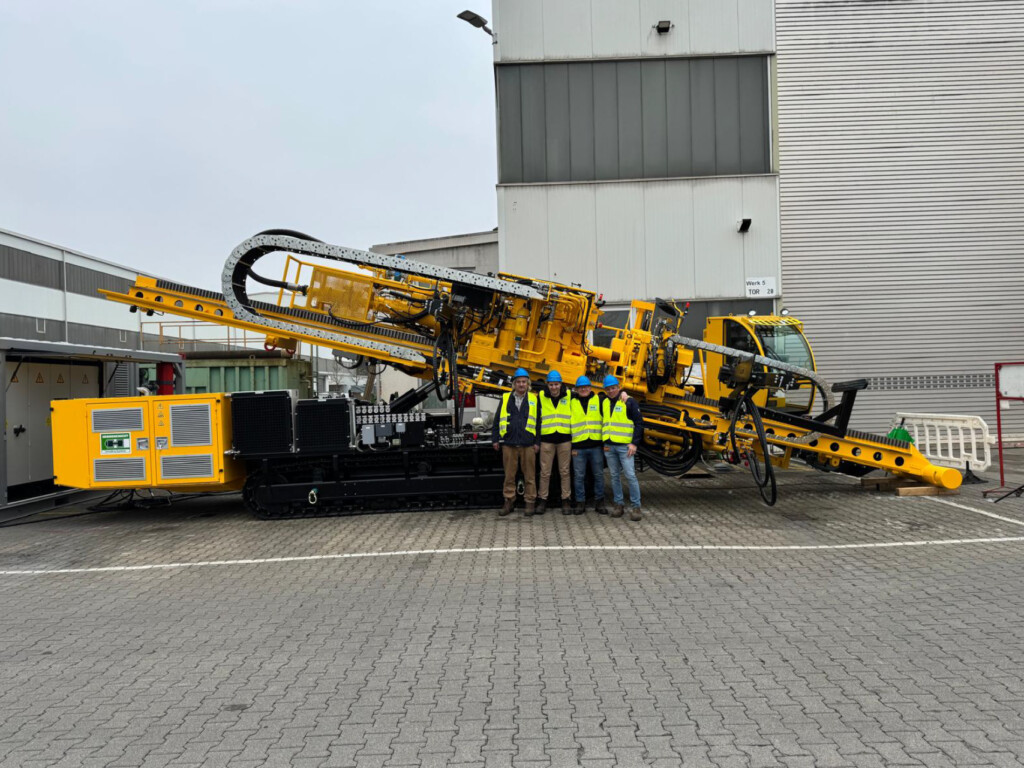
The future lies in the convergence of traditional mechanical engineering and digitalisation.
I believe the real leap forward will come from harnessing real-time data through telemetry: knowing exactly how the ground and the machine are responding with every metre drilled will allow us to make decisions proactively, optimise resources and reduce both technical and environmental risks.
❓ Finally, what advice would you give to a young engineer looking to develop a career in a sector as demanding and specialised as ours?
A good engineer in our field cannot limit themselves to drawings or office calculations. They need to see how the ground responds and how the equipment operates under real conditions.
In underground and marine works, you need to be very methodical when it comes to planning and, at the same time, very flexible when solving problems. You need to have an open and solution-oriented mindset. Of course, it is also essential to master digital tools in order to be prepared and work efficiently as the sector evolves.
In short: do not be afraid to get your boots muddy, be methodical, develop strong analytical skills and never stop being curious about how every component of the machine works and how the ground behaves.
It is a constant challenge.
And finally...
❤️ What hobby helps you switch off? The mountains, the open countryside and nature.
☕ Coffee or tea? Both. I enjoy them equally.
🏔️ Sea or mountains? Mountains.
🌍 A place you would always go back to? Switzerland. I love its landscapes, the public transport…
🍽️ A dish that is always on the table? Soup. It is something we have always really enjoyed at home.
🎬 A series, book or podcast you would recommend? El búnquer. It is a biographical podcast very well hosted by Peyu and Jair Domínguez.
😊 What small thing makes you happy on an ordinary day? Having some time to exercise. I love it: it energises me and helps me focus.
💭 Is there something about you that few people know? Probably many things, because I am a very private person.
🚀 If you could learn anything tomorrow, what would it be? Languages. I have always found them very difficult and, at the same time, I love them. Overcoming the language barrier allows you to learn new things wherever you go, without limitations.
💬 One word to describe Catalana de Perforacions? Team.
🎤Who would you nominate for the next #KnowTheTeam interview? I will leave that in your hands! I’m sure there are still plenty of interesting stories waiting to be discovered.